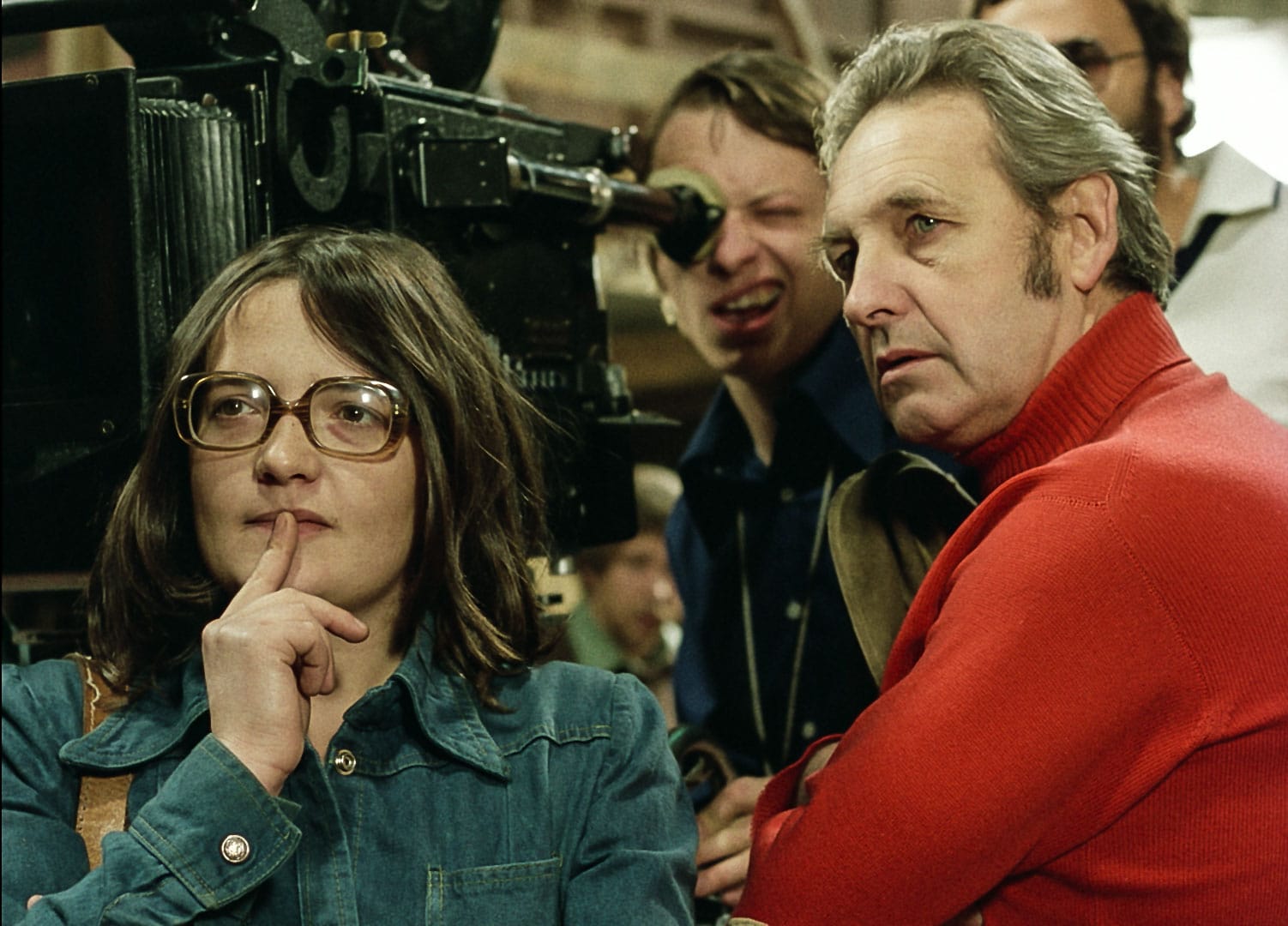


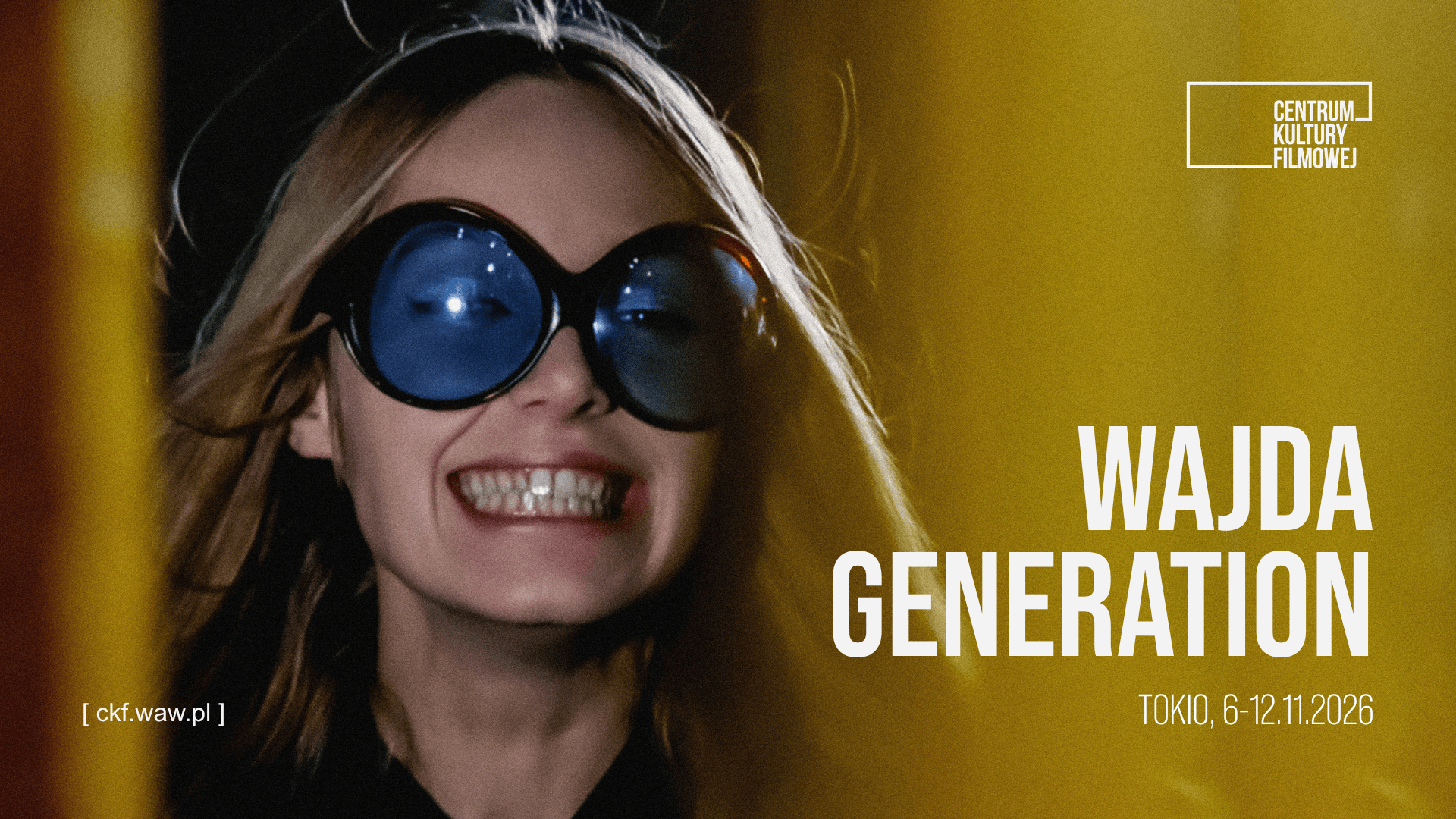
WAJDA GENERATION. Film Retrospective in Tokyo
In November, Yebisu Garden Cinema in Tokyo will host the final edition of WAJDA GENERATION, an international project initiated by the Wajda Film Centre to mark the Year of Andrzej Wajda 2026, established by the Senate of the Republic of Poland. The programme will feature special guests Agnieszka Smoczyńska and Andrzej Konopka, as well as films exploring freedom, memory, individual responsibility and the relationship between the individual and the state.
For more than half a century, Japan was an important point on Andrzej Wajda’s artistic map. It was here that one of the most fascinating threads of his creative biography unfolded – from his fascination with Japanese art to theatre and film, and ultimately to the creation of a museum dedicated to Japanese culture in Kraków. This is why Tokyo was chosen as the setting for the closing event of WAJDA GENERATION.
The programme features films that explore freedom, memory, individual responsibility and the relationship between the individual and the state. “Korczak” is a film about responsibility for another human being in a world of violence. “Afterimage” tells the story of an artist who refuses to submit his art to political ideology. “Hunting Flies” looks at ambition, career and the artistic milieu with an ironic distance. “A Generation” – Andrzej Wajda’s first feature film and one of the key works of his early career – portrays young people whose coming of age and choices are shaped by war.
The programme also includes “Aria Diva” – the first film of Agnieszka Smoczyńska, representing a new generation of Polish filmmakers and showing how far one can move beyond tradition while maintaining a personal connection with a master.
In 2002, Wajda founded the Andrzej Wajda Master School of Film Directing in Warsaw. Smoczyńska graduated from the school in 2006 and represents a direct link between generations of filmmakers. Her cinema is impossible to confuse with anyone else’s. She combines musical, horror, fairy tale, psychological drama and grotesque. This kind of independence was one of the founding principles of the school established by Andrzej Wajda: to give young filmmakers the tools to develop their own artistic language, rather than shape them in his own image.
SPECIAL GUESTS
Agnieszka Smoczyńska – director and screenwriter, a graduate of art history, cultural studies, the Radio and Television Department of the University of Silesia, and the Andrzej Wajda Master School of Film Directing.
Her feature debut, “The Lure”, tells the story of two mermaids who emerge from the Vistula River and find themselves in a Warsaw nightclub in the 1980s. The film won the Special Jury Prize for Unique Vision and Design at the Sundance Film Festival and the Golden Lions for Best Debut at the Polish Film Festival in Gdynia. “Fugue” premiered in the Critics’ Week competition at Cannes, while her English-language film “The Silent Twins”, starring Letitia Wright, won the Golden Lions for Best Film at the Polish Film Festival in Gdynia.
In Tokyo, Smoczyńska will meet the audience following the screening of “The Lure”.
Andrzej Konopka – film and theatre actor, a graduate of the State Higher School of Theatre in Kraków. He has appeared in films by Andrzej Wajda, Agnieszka Holland, Agnieszka Smoczyńska, Jan Holoubek, Leszek Dawid and Waldemar Krzystek.
In Wajda’s “Afterimage” and Smoczyńska’s “The Lure”, he worked within two very different artistic worlds. In Tokyo, he will talk about working with Wajda and about his experience working with a director who herself was educated at Wajda’s film school.
PROGRAMME
6th November, 10:30 a.m.
“The Cinema of Andrzej Wajda” – recorded lecture by Professor Kōichi Kuyama, 2026
“Korczak”, dir. Andrzej Wajda, Poland, 1990
Opening of the retrospective. Introduction by Joanna Rożen-Wojciechowska, Wajda Film Centre.
Professor Kōichi Kuyama’s lecture was recorded during the conference “Andrzej Wajda: Student, Teacher, Artist – Educational Inspirations”, held in Warsaw on 9-10 March 2026.
Based on the diaries and letters of Janusz Korczak, as well as the recollections of people who knew him, Wajda’s film tells the story of the doctor, writer and educator who ran an orphanage and remained with the children in his care until the end. The screenplay was written by Agnieszka Holland.
7th November, 10:30 a.m.
“Hunting Flies”, dir. Andrzej Wajda, Poland, 1969
Introduction by Katarzyna Ślesicka, Wajda Film Centre.
One of the most unconventional comedies in Wajda’s filmography. A shy bookstore employee meets a Polish literature student who decides to turn him into a successful writer and translator. The film is a satire of ambition, careerism and the artistic milieu. The screenplay was written by Janusz Głowacki. The film competed in the Official Competition at the Cannes Film Festival.
8th November, 10:30 a.m.
“Afterimage”, dir. Andrzej Wajda, Poland, 2016
Introduction by Grzegorz Skorupski, Wajda Film Centre.
Andrzej Wajda’s final film. Its protagonist is Władysław Strzemiński, an avant-garde artist and creator of the theory of Unism, who refuses to submit his art to the official doctrine during the Stalinist period. The system gradually deprives him of his job, his right to exhibit his work and his means of subsistence. The film was Poland’s submission for the Academy Award for Best Foreign Language Film.
9th November, 10:30 a.m.
“Korczak”, dir. Andrzej Wajda, Poland, 1990
Second screening.
10th November, 10:30 a.m.
“Hunting Flies”, dir. Andrzej Wajda, Poland, 1969
Second screening.
11th November, 10:30 a.m.
“Aria Diva”, dir. Agnieszka Smoczyńska, Poland, 2007
“A Generation”, dir. Andrzej Wajda, Poland, 1955
Post-screening conversation with Agnieszka Smoczyńska.
Agnieszka Smoczyńska’s short film “Aria Diva” tells the story of a housewife whose orderly life is transformed by an encounter with her neighbour, an opera singer. It is an intimate story about the desire for change, the discovery of one’s identity and the courage to break free from imposed roles.
Andrzej Wajda’s feature debut, “A Generation”, is set in occupied Warsaw. Its protagonist, a young man named Stach, joins an underground resistance group and gradually discovers what it means to take part in the struggle against the occupying forces. The film explores coming of age during wartime, the choices people face in times of danger and a generation whose youth was marked by history.
Presented together, the two films offer a perspective on the different experiences of young people and the ways cinema explores the formation of personal identity.
12th November, 10:30 a.m.
“Afterimage”, dir. Andrzej Wajda, Poland, 2016
Post-screening conversation with Andrzej Konopka.
A second screening of Wajda’s final film, followed by a conversation with the actor. The discussion will focus on working with Andrzej Wajda and on Konopka’s experience working with Agnieszka Smoczyńska, a director who belongs to the generation educated at the film school founded by Wajda.
Andrzej Wajda – From Japanese Woodcuts to the Kyoto Prize
In 1944, at the age of eighteen, Andrzej Wajda saw a collection of Japanese woodblock prints belonging to Feliks “Manggha” Jasieński at Kraków’s Cloth Hall. It was a moment that would permanently shape his imagination and his relationship with Japanese art.
More than four decades later, in 1987, Wajda received the prestigious Kyoto Prize, awarded by the Inamori Foundation. He donated the entire prize to the creation in Kraków of a museum for the Japanese collection that had fascinated him as a young man.
In 1989, he staged Nastazja, based on Dostoevsky’s The Idiot, in Tokyo and Osaka. He entrusted the leading role to Bandō Tamasaburō, one of the greatest actors of Japanese kabuki theatre. Wajda cast him in the dual role of Nastasya Filippovna and Prince Myshkin. Five years later, he adapted Nastazja for the screen, making the film in Japanese and primarily for Japanese audiences.
In 1994, the Manggha Museum of Japanese Art and Technology opened in Kraków. Designed by Japanese architect Arata Isozaki, it became one of the most important institutions dedicated to Japanese culture in Poland. Two years later, the Japan Art Association awarded Wajda the Praemium Imperiale.
For many years, Japan has also been one of the countries where Polish auteur cinema has found a particularly attentive audience. Wajda returned to Tokyo not only as a filmmaker, but also as an artist who built a lasting bridge between Polish and Japanese culture.
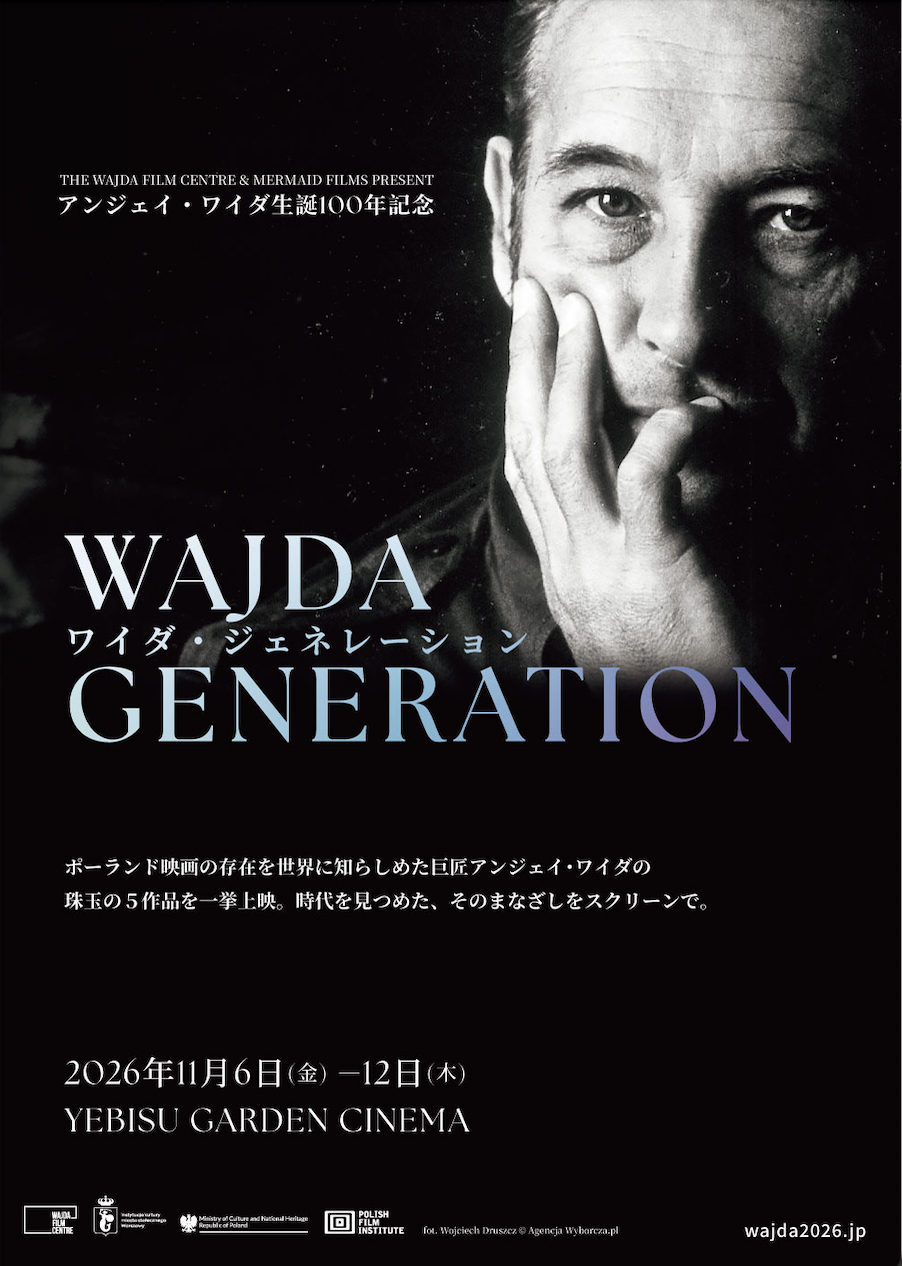
WAJDA GENERATION
WAJDA GENERATION was initiated by the Wajda Film Centre to mark the Year of Andrzej Wajda 2026. Its first edition took place in Los Angeles at the Academy Museum of Motion Pictures from 31 July to 2 August 2026. The programme featured films by Agnieszka Holland as well as Andrzej Wajda’s “Korczak”.
The Tokyo edition is the final chapter of the project and, at the same time, a return to a country with which Wajda shared one of the most important artistic relationships of his life.
Organiser: Wajda Film Centre
Co-organiser: Mermaid Films
Partners: Adam Mickiewicz Institute; Manggha Museum of Japanese Art and Technology in Kraków, Wajda School
Co-financed by the Minister of Culture and National Heritage from the Culture Promotion Fund – a state special-purpose fund.

The project is carried out with funding granted pursuant to the Act of 30 June 2005 on Cinematography (Journal of Laws of 2023, item 130) and its implementing regulations, and in accordance with the Operational Programmes of the Polish Film Institute. The funding was awarded by the Polish Film Institute from the Culture Promotion Fund as part of the funds allocated in 2026 to support the statutory activities of the Polish Film Institute, in connection with the implementation of the following Operational Programmes: Dissemination of Film Culture, Film Production, Cinema Development, and Promotion of Polish Films Abroad.